Stone Settings
Gemstones can be a way to add symbolism, story, color, or sparkle to your rings, and I am happy to help you source your stones. The providers I work with specialize in ethically sourced diamonds, fair-trade gems, US and Canadian mined stones, and lab-grown stones. Some couples choose to use a family stone, which is a beautiful way to incorporate an heirloom into your ring.
With stone setting, the little things really matter. To ensure that a stone is set properly often the size of the stone and the way a setting attaches to the band come down to fractions of a millimeter. If you have a family stone or a specific design in mind, we want to confirm that everything will work before you book your workshop and your metal order is placed. Some settings are not doable in my workshop, so please read below to see if your idea is a fit. The best place to start is collecting photos and telling me about your ideas before booking your workshop.
All stone settings are added after the workshop. This step generally takes 4-6 weeks.
The additional cost will depend on your design.
Settings Offered and Things to Know
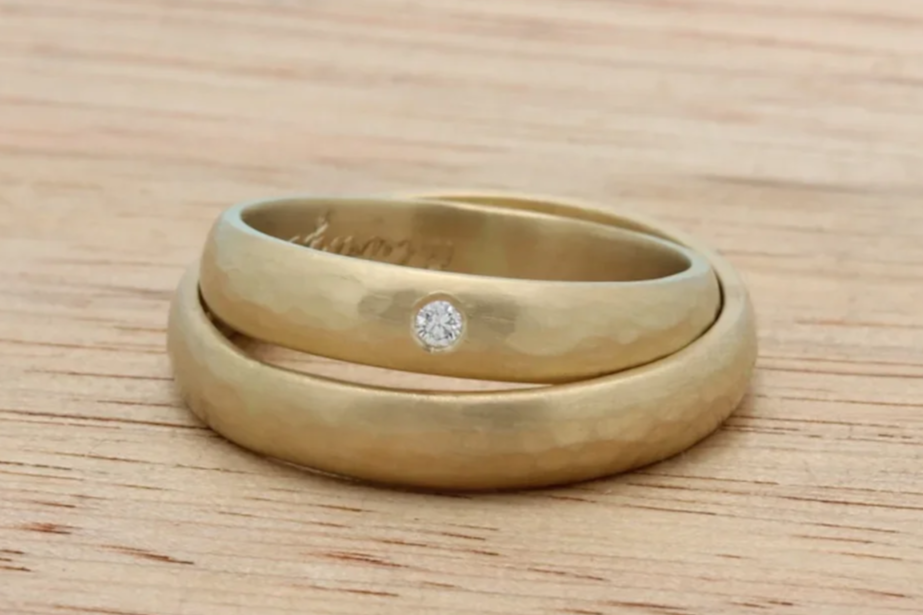
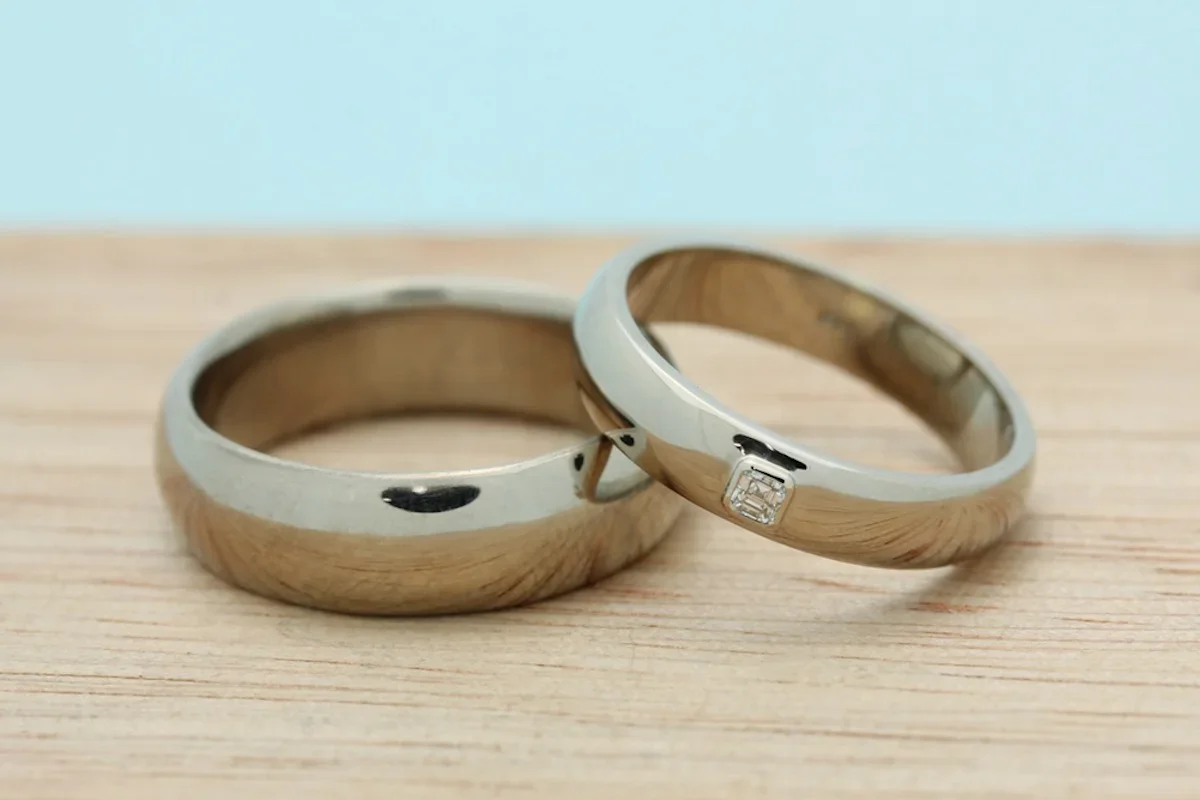
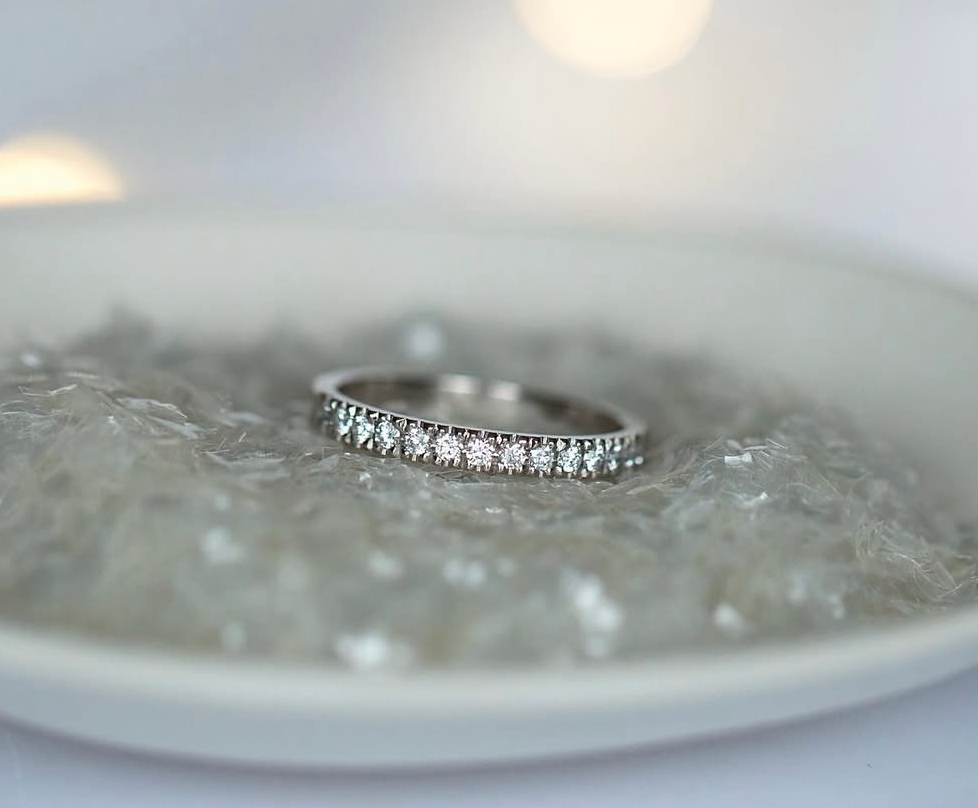
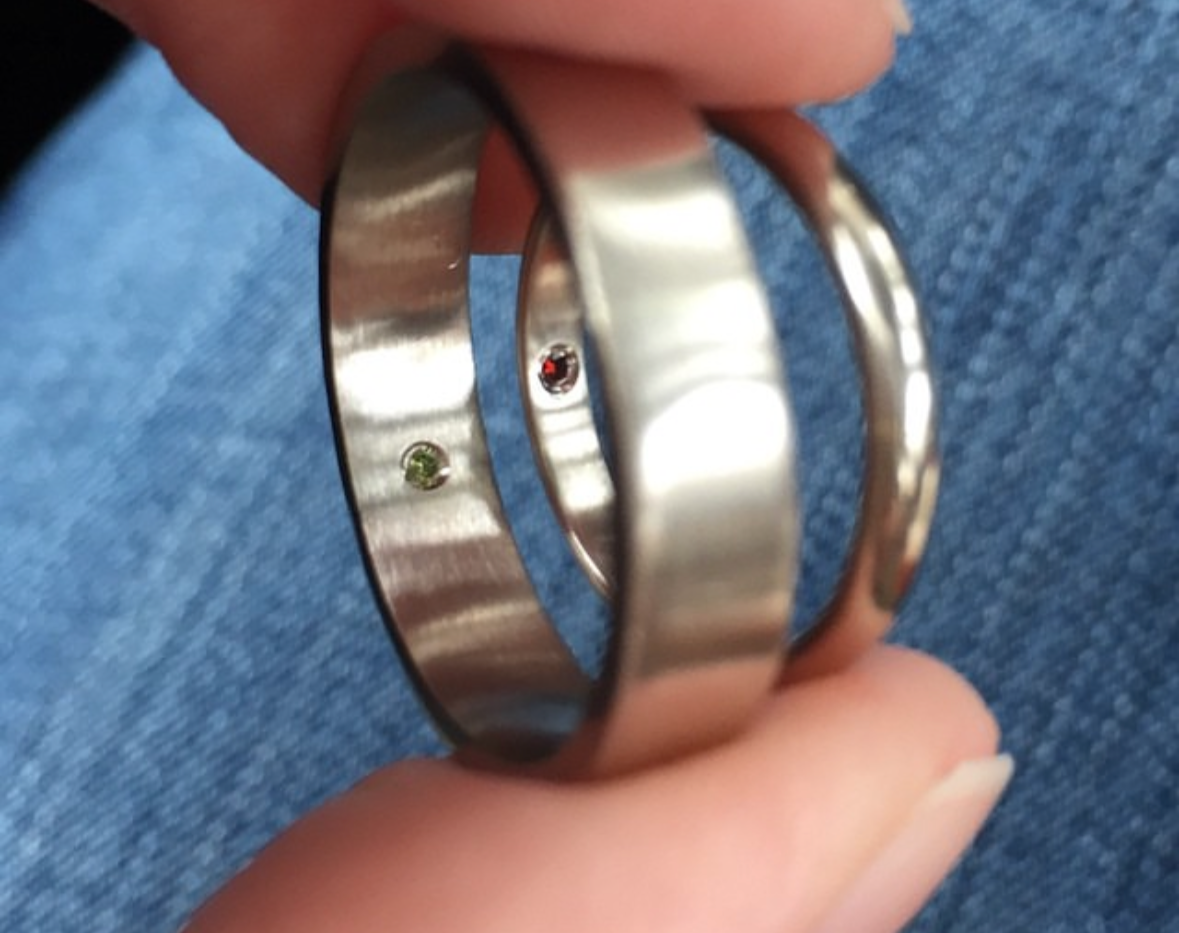
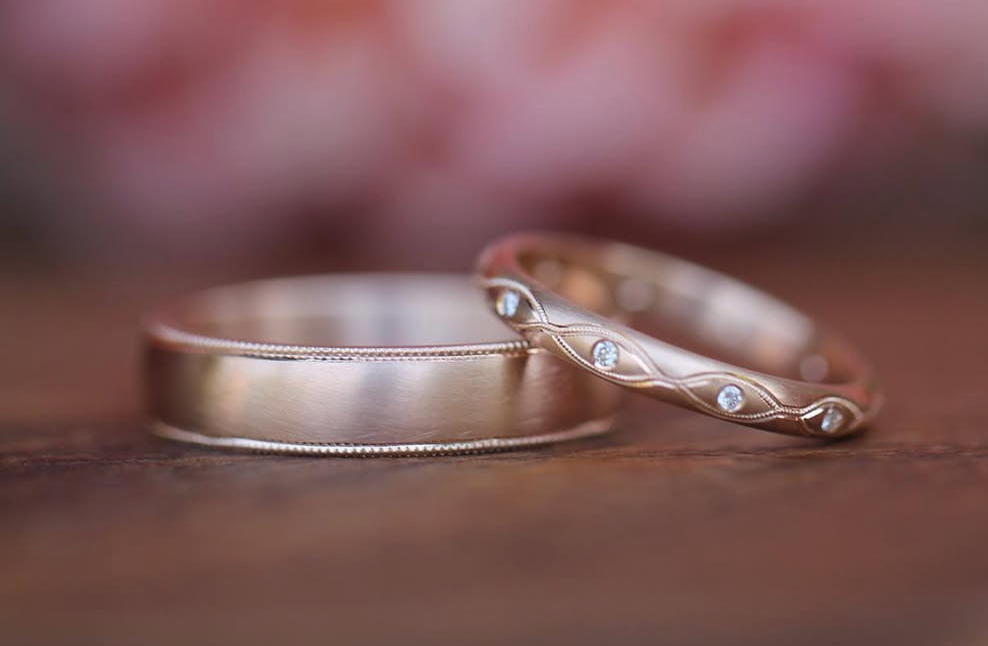
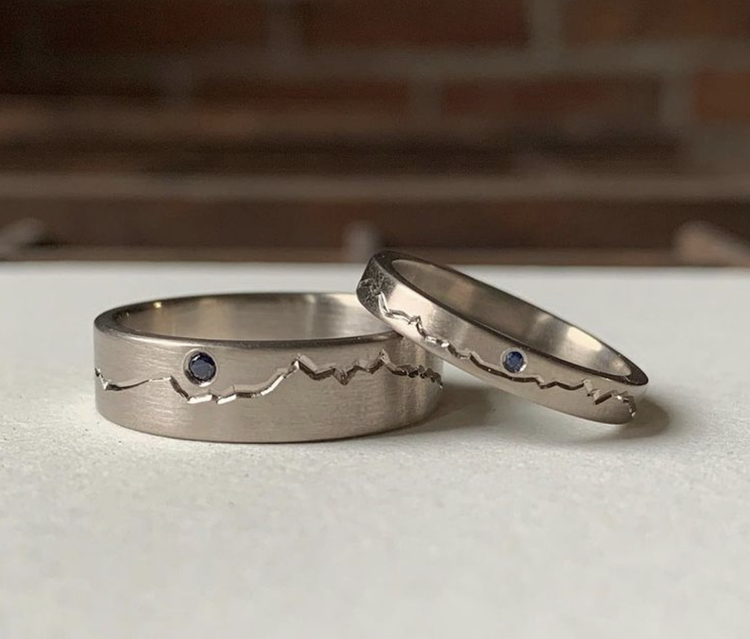
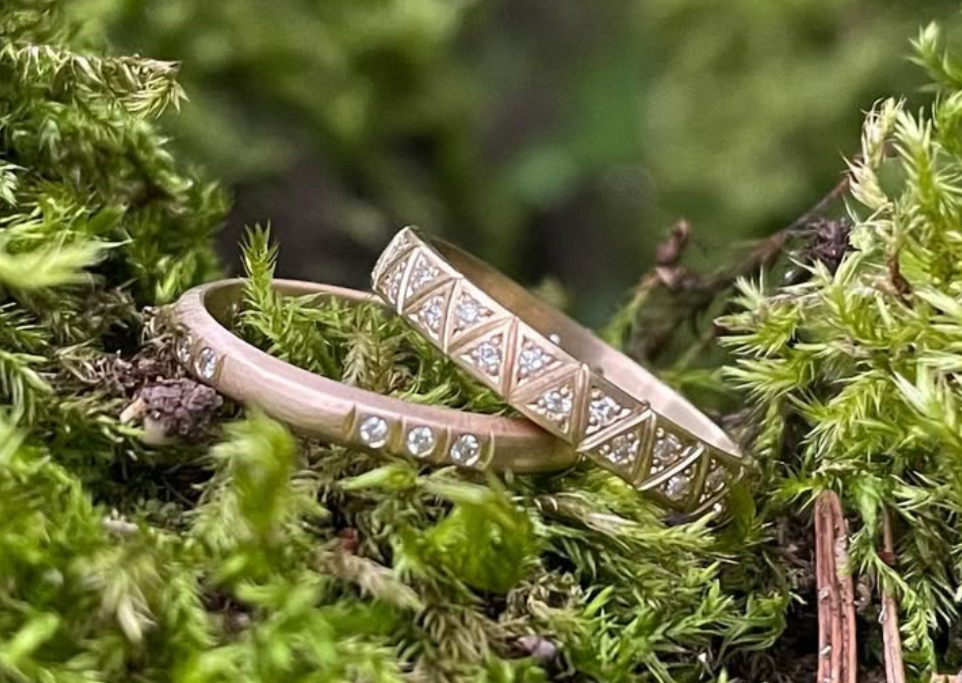
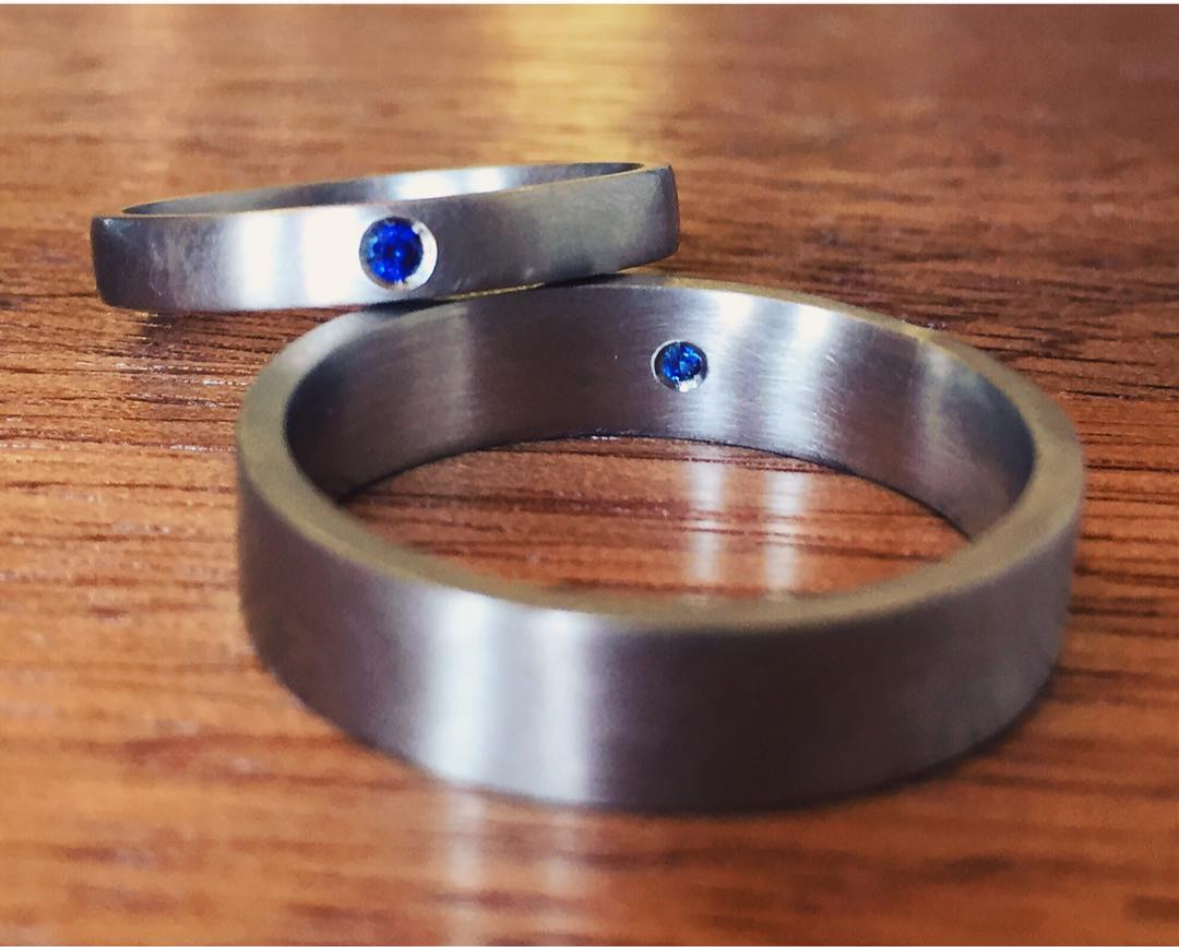
Flush, Low Bezel, Pavé, Bead Settings
These are the setting options for small stones, typically under 2mm. The main thing to keep in mind is that the band has to be able to accommodate the width and depth of the stone.
If you have your own stone or a specific design in mind we want to go over all of the details before you book your workshop. Learn more below.
These options are available in the Fabrication Plus Custom Elements Workshop.
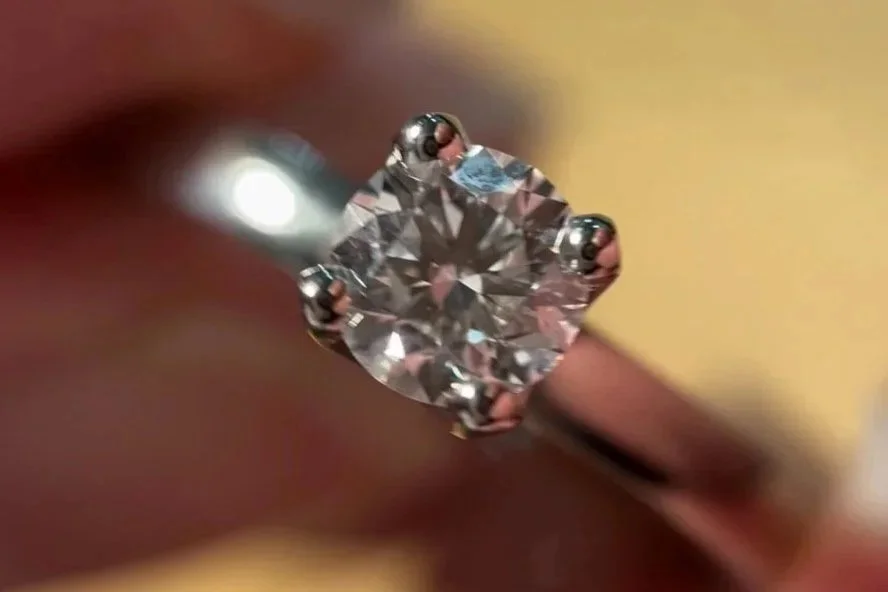
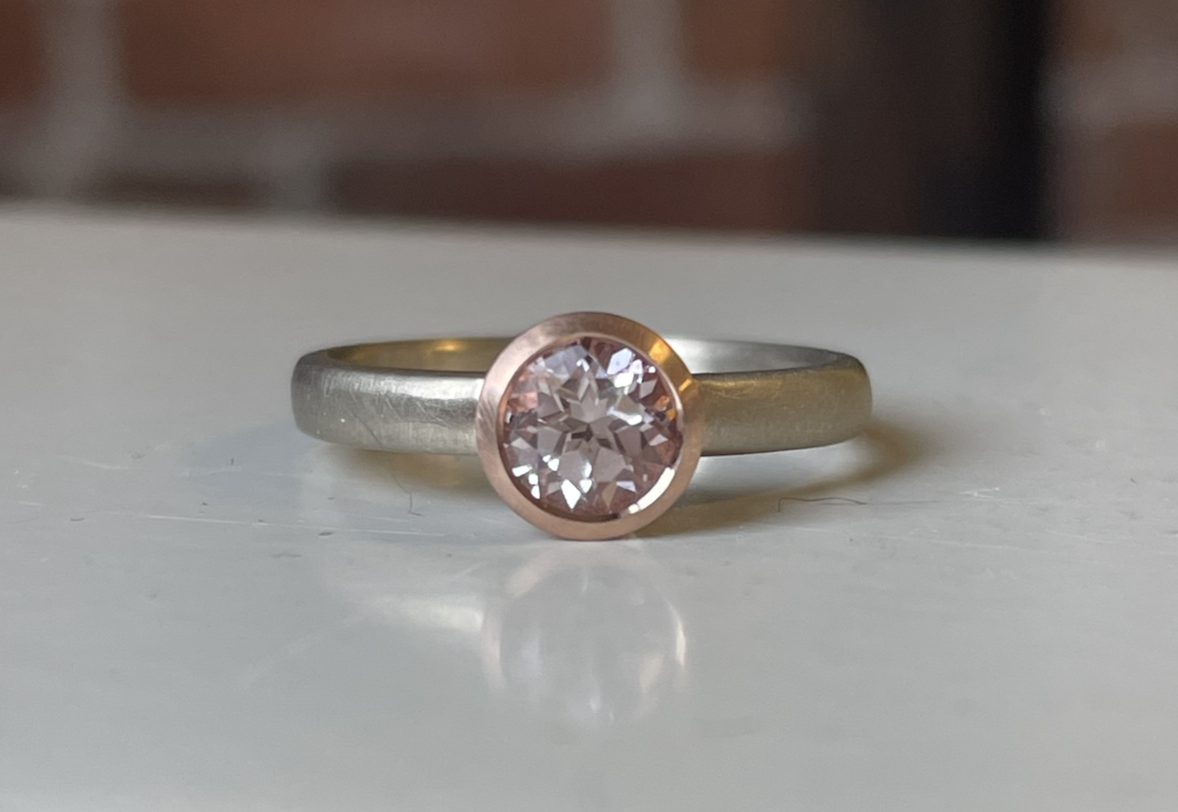
Prominent Set Stones: Prong and Bezel Settings (Not currently offered)
We are limited to basic setting options. Keep in mind that many of the engagement ring styles you see online today are designed in CAD and then cast, so the setting and band are one solid piece. That allows for more design freedom in the transition between band and setting. Since this is a workshop experience, we make the band together in the class, then the setting will be added after. This means we want that connection point to be solid and heirloom quality. This does limit the design possibilities. Learn more in the Engagement Ring Workshop section.
Bringing your own stone
I have had many couples bring a stone that is special to them, from diamonds in a piece of family jewelry to sapphires that they mined themselves in Montana! This can be an amazing way to add another layer of history to your ring either from your family or your time together as a couple. For some, a family stone can also help with their overall budget.
I want to make sure that you are able to use your meaningful stone and that the setting will be heirloom quality. So we will want to go over all of the info about the stone and your design ideas before booking your workshop.
For flush settings
It is common that people think the family stones they have are tiny enough to be flush set, but they end up being too large for this type of setting. If the size is off by even a fraction of a millimeter, it can unfortunately eliminate the stone as an option. If I have all of the correct info upfront I can make sure the band you create will work with your stone. Sometimes it is simply a matter of selecting a band that is 0.5mm wider or opting for a slightly raised bezel setting. Either way, the best first step is letting me know your ideas and about the stones that you have.
FOr PROMINENT set stones
For prong or bezel set stones using your own stone will be a case by case basis. If you would like to include a stone that you have, let me know and we will go over all of the details together.
Choosing a stone
The best place to start is by collecting photos of ring designs and stones that you like and letting me know what is important to you. From there I can help bring your ideas to life!
Durability
Rings, especially when worn daily, take on a lot of wear, more than any other type of jewelry so it’s important to weigh out the lifespan of the stone. Diamonds, moissanite, sapphires, and rubies are the hardest options. Other gemstones can be much softer than people expect. I am always happy to help you weigh out your options.
If you would like a birthstone or a gem to represent something personal we can explore your options. If it’s a softer stone you will want to consider if you are ok with the surface scratching or becoming cloudy with years of wear. Softer stones are also more likely to need replacing down the road. If you want a more durable alternative, sapphires and diamonds come in a range of colors, so we can often match the color of the gem you want in a harder stone. For small stones (melee), the price difference between diamonds, sapphires, and other gems is much smaller than most people expect, so it's worth exploring all your options. Learn more about durability and diamond alternatives here.
Exploring your options
If you are looking at a variety of different types of stones in person I always recommend paying attention to the size in millimeter rather than carat. This is because carat size is not visually equal across all gemstones! The carat is the weight of the stone and different stones have different densities. So a 1 carat diamond will be larger in size than a 1 carat sapphire but smaller than a 1 carat moissanite.